Choosing the right NMRV worm gearbox is an important step in designing a reliable industrial drive system. The gearbox affects output speed, torque, installation space, motor compatibility, and overall operating performance. A suitable selection should consider not only motor power but also the required reduction ratio, output shaft configuration, mounting arrangement, and working conditions.
The NMRV Series Worm Gearbox with Motor is available in frame sizes from NMRV025 to NMRV110, with a listed motor power range of 0.06–15 kW, reduction ratios from 5 to 100, and output torque ratings from 10 to 1,500 N·m across the series. These ranges provide a starting point for equipment manufacturers, distributors, and industrial buyers evaluating a suitable drive solution.
This guide explains the key selection factors, summarizes the published model specifications, and outlines the information buyers should prepare before requesting a quotation.
Quick selection checklist
Required output speed and reduction ratio
Required output torque and motor power
Gearbox frame size and available installation space
Motor type, voltage, frequency, and mounting interface
Hollow or solid output shaft
Housing material, protection grade, and operating environment
1. What Is an NMRV Worm Gearbox?
An NMRV worm gearbox is a speed-reduction unit that transmits power through a worm and worm wheel. It is commonly considered for machinery requiring a compact drive arrangement and reduced output speed. When supplied with a motor as an integrated unit, it combines the motor and gearbox into one assembly, simplifying equipment integration.
The NMRV Series Worm Gearbox with Motor supports IEC motor input and offers motor-mounted or flange-mounted configurations. Depending on the selected configuration, buyers can specify a hollow or solid output shaft and choose between aluminum alloy and cast iron housing options.
Key product characteristics
Transmission structure: Worm and worm wheel.
Motor options: AC motor, brake motor, or servo motor, subject to configuration confirmation.
Output options: Hollow shaft or solid shaft.
Housing options: Aluminum alloy or cast iron.
Lubrication: Synthetic oil lubrication.
Installation: Multiple installation positions are available.
These options allow the drive unit to be configured for different machinery layouts. Buyers should confirm the selected model and configuration against the manufacturer's current technical documentation before finalizing a design.
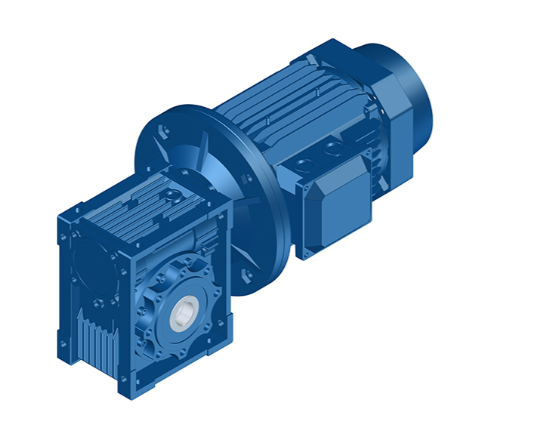
NMRV Series Worm Gearbox with Motor
A compact worm gearbox solution with motor options, multiple reduction ratios, and flexible mounting and output shaft configurations for industrial drive applications. Confirm model-specific specifications and compatibility with your application.
View Product Details2. Check the Technical Specifications Before Selecting a Model
Before comparing individual frame sizes, review the published specifications for the NMRV series. The following table summarizes the product information provided on the manufacturer's NMRV Series Worm Gearbox with Motor page.
| Parameter | Published specification |
|---|---|
| Product series | NMRV Series |
| Gear type | Worm gear |
| Transmission structure | Worm and worm wheel |
| Mounting type | Motor-mounted / flange-mounted |
| Input type | IEC motor input |
| Motor type | AC motor / brake motor / servo motor optional |
| Output shaft | Hollow shaft / solid shaft optional |
| Housing material | Aluminum alloy / cast iron optional |
| Worm material | Hardened alloy steel |
| Worm wheel material | Bronze alloy |
| Lubrication | Synthetic oil lubrication |
| Protection grade | IP54 / IP55 optional |
| Insulation class | Class F |
| Efficiency | Up to 90% |
| Reduction ratio range | 5–100 |
| Motor power range | 0.06–15 kW |
| Output torque range | 10–1,500 N·m |
Important: These are published series-level specifications and configuration options. Actual performance and compatibility depend on the selected model, motor, ratio, and operating conditions. Confirm the final configuration with the supplier before ordering.
3. Compare NMRV Models, Motor Power, and Output Torque
Frame size is an important starting point when choosing an NMRV worm gearbox. The manufacturer's published model table lists eight frame sizes, with different reduction-ratio ranges, motor power ranges, and output torque ratings.
| Model | Frame Size | Ratio Range | Motor Power (kW) | Output Torque (N·m) |
|---|---|---|---|---|
| NMRV025 | 025 | 5–60 | 0.06–0.25 | 10 |
| NMRV030 | 030 | 5–80 | 0.09–0.55 | 25 |
| NMRV040 | 040 | 7.5–100 | 0.12–1.1 | 50 |
| NMRV050 | 050 | 7.5–100 | 0.18–2.2 | 100 |
| NMRV063 | 063 | 7.5–100 | 0.37–4 | 200 |
| NMRV075 | 075 | 7.5–100 | 0.55–7.5 | 400 |
| NMRV090 | 090 | 7.5–100 | 1.1–11 | 800 |
| NMRV110 | 110 | 7.5–100 | 2.2–15 | 1,500 |
How should buyers use this table? First, identify the approximate output torque and motor power needed by the equipment. Then compare the corresponding model's published ratio range and confirm that the proposed configuration meets the required output speed, mounting dimensions, and duty conditions.
The torque values above are the ratings shown in the product table, not a guarantee that every motor-and-ratio combination within a model will deliver the same torque. Ask the manufacturer to confirm the applicable rating for your exact configuration.
4. Calculate the Required Reduction Ratio
The reduction ratio connects motor speed with gearbox output speed. For a preliminary estimate, use the following relationship:
Reduction Ratio ≈ Input Speed ÷ Output Speed
For example, if the motor's rated speed is 1,400 rpm and the application requires an output speed of approximately 70 rpm, the preliminary ratio is:
1,400 ÷ 70 = 20
This example illustrates the calculation method; it is not a confirmed operating specification for a particular NMRV model. Actual output speed depends on the selected motor's operating speed and the gearbox ratio. Confirm available ratios and the resulting output speed with the supplier.
What else should be considered?
Check whether the required output speed is a nominal target or must be maintained within a specific tolerance.
Consider whether a variable-frequency drive or another speed-control method will be used.
Confirm that the selected ratio is available for the proposed frame size and motor configuration.
5. Match Motor Power and Output Torque to the Load
Motor power and output torque are related, but they are not interchangeable selection criteria. The motor must provide sufficient power for the required operating speed and load, while the gearbox must be suitable for the torque and duty conditions experienced in service.
When selecting an NMRV worm gearbox, identify the following requirements:
Load type: Determine whether the equipment operates with a relatively steady load or experiences frequent load changes.
Starting requirements: Consider the torque needed during startup and acceleration.
Operating frequency: Record the expected running hours, starts, and stops.
External loads: Identify any radial or axial forces applied to the output shaft and confirm the permitted limits.
Safety margin: Ask the supplier to assess the application-specific service factor and operating conditions.
A model should not be chosen solely because its listed motor power matches the existing motor. The selected gearbox, ratio, shaft arrangement, and motor must work together within their rated limits.
6. Choose the Right Mounting and Output Shaft Configuration
Mechanical compatibility is essential when integrating a gearbox into a new machine or replacing an existing drive. The NMRV Series Worm Gearbox with Motor offers motor-mounted and flange-mounted configurations, together with hollow and solid output shaft options.
Motor-mounted or flange-mounted
Choose the mounting arrangement that matches the equipment's structure and available installation space. Before ordering, confirm the mounting face, flange dimensions, fixing holes, input interface, and clearance around the assembly. Do not assume that two gearboxes with the same frame designation have identical interfaces across all configurations.
Hollow shaft or solid shaft
A hollow shaft may suit equipment designed for direct shaft or plug-in mounting, while a solid shaft may be required when the machine connects through a shaft, coupling, or other transmission component. The appropriate choice depends on the driven equipment's interface and load arrangement.
For replacement projects, provide the existing gearbox model, dimensional drawing, shaft details, and mounting photographs if available. These details help the supplier verify whether the proposed unit is a suitable replacement.
7. Select the Motor, Housing, and Protection Options
The product page lists AC motors, brake motors, and servo motors as optional configurations. It also identifies aluminum alloy and cast iron housing options, along with IP54/IP55 protection grades and Class F insulation.
These options should be selected according to the machine's electrical requirements, installation environment, and control system.
Motor type: Confirm whether a standard AC motor, brake motor, or servo motor is required by the application.
Voltage and frequency: Specify the local power supply requirements and confirm compatibility with the selected motor.
Housing material: Select aluminum alloy or cast iron based on the required configuration and installation needs.
Protection grade: Confirm whether the available IP54 or IP55 option is suitable for the actual exposure to dust and moisture.
Insulation: The product page lists Class F insulation; confirm the motor's complete electrical specification before purchase.
Lubrication: The listed gearbox uses synthetic oil lubrication. Follow the supplier's guidance for the specific model and operating conditions.
Do not assume that an optional feature is included in every standard assembly. State the required motor, voltage, frequency, protection grade, and other preferences in the quotation request.
8. Consider the Application and Operating Environment
NMRV worm gearboxes with motors are listed for applications including conveyor equipment, packaging machinery, food processing machinery, textile machinery, and industrial automation systems.
Although these applications may share a need for speed reduction, their operating conditions can differ significantly. A conveyor may experience starting loads, while a packaging line may require frequent starts and stops. A food-processing installation may have specific requirements for cleaning, moisture exposure, or equipment materials.
Before selecting a gearbox, document:
The driven machine and its operating purpose.
Required output speed, torque, and direction of rotation.
Operating hours, start-stop frequency, and load variation.
Ambient temperature, dust, moisture, and cleaning conditions.
Installation position, available space, and maintenance access.
Provide this information to the supplier for a configuration review. The published series specifications are a starting point, not a substitute for checking the selected unit against the actual application.
9. NMRV Worm Gearbox vs. Other Gearbox Types
Different gearbox designs serve different drive-system requirements. The most appropriate option depends on the machine's speed, torque, space, efficiency, installation, and operating conditions.
| Selection factor | NMRV worm gearbox | Other gearbox designs |
|---|---|---|
| Drive arrangement | Worm and worm wheel | Depends on the gear type |
| Typical consideration | Compact arrangement and reduction ratios suited to the application | May suit different efficiency, torque, or layout priorities |
| Efficiency | Published series efficiency: up to 90% | Must be checked against the specific model and ratio |
| Final selection | Confirm the frame, ratio, motor, torque, and mounting details | Compare rated performance and dimensions for the intended duty |
The table provides a general selection framework rather than a direct performance ranking. Compare actual manufacturer data for the candidate models before making a final decision.
10. Common Mistakes When Choosing an NMRV Worm Gearbox
Choosing by motor power alone
A matching power rating does not confirm that the gearbox can handle the required output torque, load variation, or operating duty. Check the complete drive configuration.
Ignoring the output speed
Choosing an unsuitable ratio can result in an output speed that does not meet the machine's operating requirements. Calculate the preliminary ratio and verify the available model options.
Overlooking mounting dimensions
Flange dimensions, shaft geometry, fixing holes, and installation orientation can affect whether the gearbox fits the machine. Confirm these interfaces before placing an order.
Assuming every option is standard
Motor types, housing materials, protection grades, and output configurations may be optional. Specify the required features and request confirmation of the exact assembly.
Not explaining the operating conditions
Duty cycle, environmental exposure, and load characteristics can affect selection. Share these details with the supplier instead of relying only on a model number.
11. What Information Should You Provide for a Quotation?
Providing complete technical information helps the supplier evaluate the required NMRV worm gearbox and motor configuration more efficiently. Use the following checklist when preparing an inquiry.
Application: Machine type and purpose.
Model: Preferred NMRV frame size, if already identified.
Motor power: Required power in kW, or the existing motor specification.
Input speed: Motor rated speed in rpm.
Output speed: Required gearbox output speed in rpm.
Torque and load: Required output torque, load characteristics, and operating duty.
Mounting: Motor-mounted or flange-mounted arrangement and any dimensional drawing.
Output shaft: Hollow or solid shaft, plus relevant dimensions.
Electrical requirements: Motor type, voltage, frequency, and any brake or control requirements.
Environment: Ambient conditions and required protection grade.
Quantity: Order quantity and any recurring procurement needs.
If you are replacing an existing unit, include the original model number and clear photos of the gearbox nameplate, motor, mounting face, and output shaft. If you are designing new equipment, a layout drawing or a list of required operating parameters can help clarify the selection.
Need Help Selecting an NMRV Worm Gearbox?
Share your required output speed, torque, motor power, installation dimensions, and operating conditions. The supplier can review the available NMRV models and help confirm a suitable configuration for your machinery.
12. Frequently Asked Questions
What is the motor power range of the NMRV Series Worm Gearbox with Motor?
The product page lists a motor power range of 0.06–15 kW across the NMRV series. The available range varies by frame size, so confirm the required power against the specifications of the individual model.
What reduction ratios are available?
The published series-level ratio range is 5–100. The model table lists 5–60 for NMRV025, 5–80 for NMRV030, and 7.5–100 for NMRV040 through NMRV110. Confirm the exact ratio options available for your selected configuration.
What is the output torque range?
The product page lists an overall output torque range of 10–1,500 N·m. Its model table gives a torque value for each frame size. Ask the supplier to verify the applicable rating for your required motor and ratio combination.
Can I choose a hollow shaft or a solid shaft?
Yes. Both hollow and solid output shaft configurations are listed as options. The correct selection depends on the driven machine's interface, shaft dimensions, and loading requirements. Confirm the exact dimensions before ordering.
Which motor types can be used with the NMRV gearbox?
The product page lists AC motors, brake motors, and servo motors as optional configurations. Motor suitability depends on the application and the selected assembly. Specify the motor type, voltage, frequency, and control requirements when requesting a quotation.
Can the NMRV gearbox be customized?
The manufacturer lists options for motor brand, voltage, frequency, flange dimensions, output configuration, and special application requirements. Provide your drawings and technical specifications so the supplier can confirm which custom configurations are available.
Conclusion
Choosing the right NMRV worm gearbox requires more than matching a model number to a motor. Buyers should evaluate the required reduction ratio, output speed, torque, motor power, mounting dimensions, output shaft, and operating environment as one complete drive-system requirement.
The NMRV series includes frame sizes from NMRV025 to NMRV110, with different published ratio and motor power ranges. Use the specifications as a preliminary screening tool, then confirm the final model and configuration with the manufacturer before purchase. A complete quotation request with application details and dimensional requirements can help reduce selection errors and improve equipment compatibility.