What Information Is Needed for a Custom Gearbox Quote?
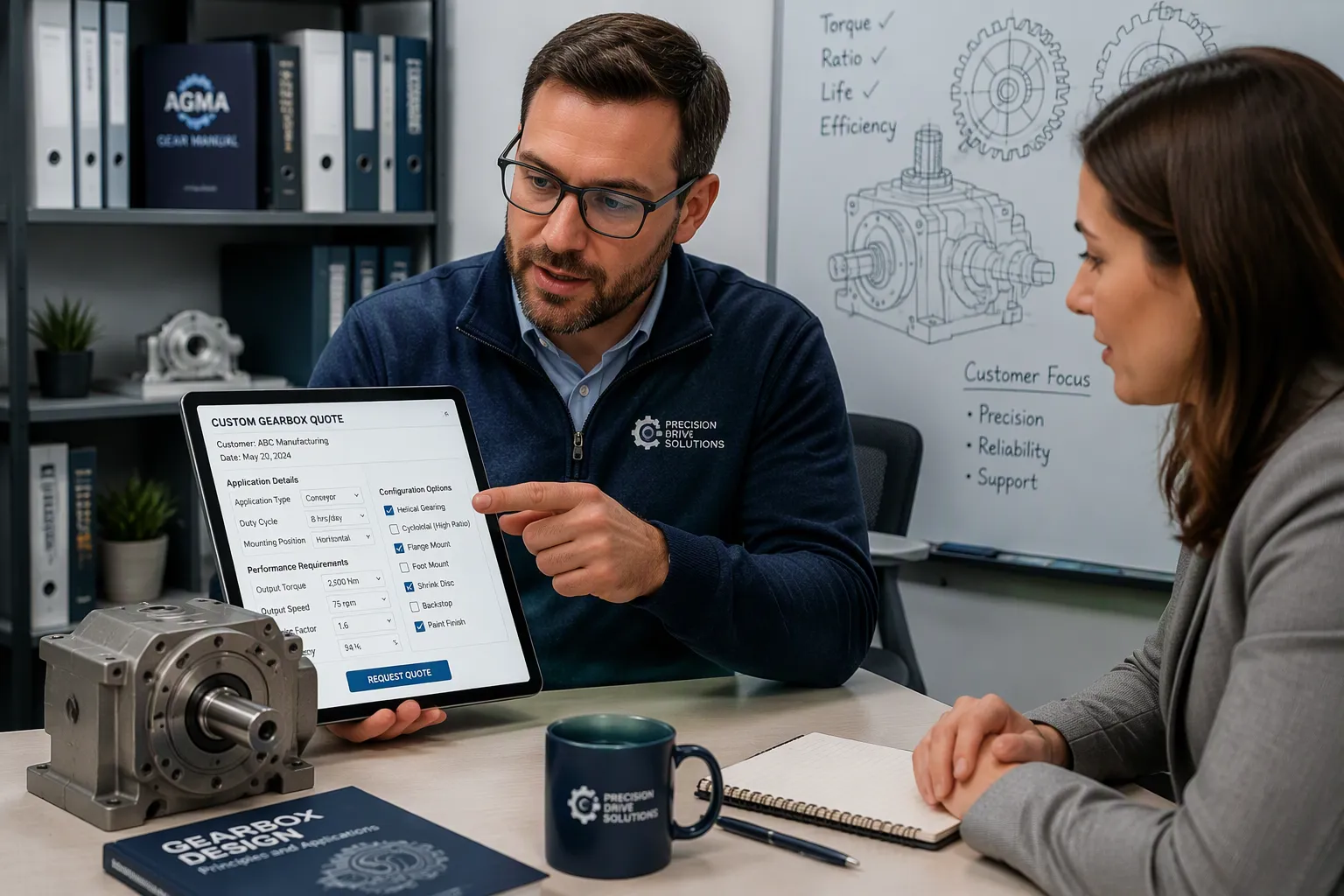
To get a quote on a custom gearbox, a custom gearbox OEM needs six items. These are a drawing or sample, gear parameters, material and heat treatment, quantity, application data, and inspection plus delivery requirements. The information needed is simple, yet buyers often leave out details. Complete data produces an accurate price, a realistic lead time, and fewer revision cycles. The essential information also lets the manufacturer commit to firm schedules. This is the most important information you can supply. A custom gear quote built on guesses costs you time. This post breaks down each item, explains why it matters to your quotation, and shows what to do when details are unknown.
Key Takeaways
Give six key items for an accurate quote: a drawing or sample, gear details, material and heat treatment, quantity, application data, and inspection plus delivery requirements.
When you give complete information, you get accurate pricing and realistic lead times. You also go through fewer revision cycles.
Missing details cause delays and higher costs. This happens because manufacturers add extra padding when they are unsure.
Mark unknown values instead of guessing to keep the quote process smooth and fast.
A request that is well prepared gets a firm quote fast, often within one to three business days.
Why Details Drive an Accurate Quote
Missing Data and Its Impact
When you leave gaps in your gear RFQ, the manufacturer has to fill them with guesses. Every guess carries risk, and risk carries a price. Suppliers protect themselves by adding extra room into both cost and schedule. Industry guidance even suggests adding a 15–20% buffer to the stated lead time. This covers specification changes and first-article inspection rounds. That buffer exists because unclear specs make changes more likely.
Incomplete data is the most common cause of slow quote turnaround and wide quote-to-invoice variance. Pricing and lead time respond directly to engineering parameters. Vague parameters at the RFQ stage widen that variance, and manufacturers offset it with larger price buffers and longer schedules. You pay for the uncertainty, not the gearbox.
The Cost of Revision Cycles
A thin RFQ starts a back-and-forth loop. Engineering reviews your drawing, finds a missing tolerance, and sends questions. You answer, the custom gearbox OEM re-quotes, and the schedule slips. Each cycle uses engineering time on both sides and delays delivery. First-article submissions may need repeated adjustments, and those rounds stretch the timeline further. Squeezing a schedule below typical 16-week cycles raises the risk of these rounds, budget variances, and quality escapes.
A complete RFQ breaks the loop. When your data covers drawings, parameters, materials, quantity, and inspection requirements, the manufacturer can commit to firm pricing and firm schedules. You get a more accurate quotation on the first pass and a practical quotation you can plan around. Complete quote data also supports an accurate price, because the supplier no longer prices your unknowns.
Core Information for a Custom Gear Quote
Drawings, Samples, and Gear Parameters
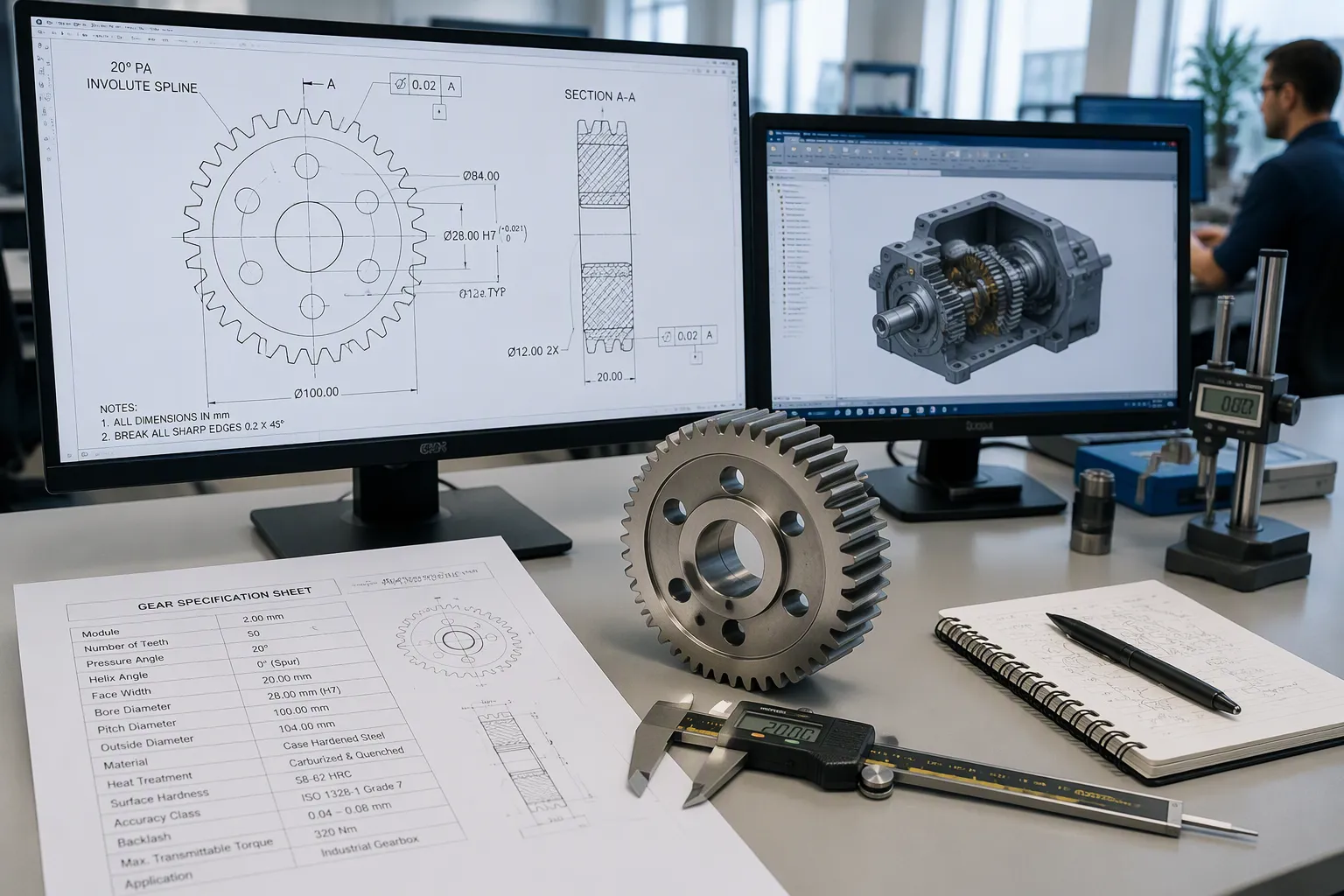
A complete request starts with a 2D or 3D CAD drawing, or a physical sample if you have no drawing. The drawing shows the dimensions, tolerances, and datums that define the part. Gear parameters come next: module, number of teeth, ratio, torque, and input and output speed. These values set the gear geometry specifications and drive the size, bearing selection, and housing design. A sample works well for drop-in replacement work, because the manufacturer can measure every feature directly.
Your application details matter just as much. Tell the supplier about the driven machine, duty cycle, mounting position, and operating environment. These facts shape lubrication, sealing, and cooling choices. Inspection and delivery requirements complete the picture. State the quality level, test reports, packaging, and shipping terms you expect.
Changyulong shows how this data turns into real parts. Helical units use 20CrMnTi alloy steel, case-hardened to 58–62 HRC. Cycloidal reducers use GCr15 bearing steel. Worm wheels use tin bronze. Gears grind to DIN 6 accuracy, and every unit passes 100% load, noise, and oil-leak testing. The company also delivers 3D CAD models within 48 hours, which shortens the quotation process for both sides.
Materials, Heat Treatment, and Quantity
Material and heat treatment requirements decide the gear's strength, wear life, and cost. A through-hardened gear suits moderate loads. A case-hardened gear handles high torque with a tough core and a hard surface. Specify the steel grade, the hardness range, and the case depth where relevant. Your heat treatment requirements also affect lead time, because heat treatment adds process steps and inspection points.
Category | What to Supply | Why It Matters |
|---|---|---|
Drawings or samples | 2D/3D CAD files or a physical part | Defines every dimension and tolerance |
Gear parameters | Module, teeth, ratio, torque, speeds | Sets size, strength, and ratio |
Material and heat treatment | Steel grade, hardness, case depth | Controls durability and cost |
Quantity | Annual volume and batch size | Sets tooling and unit pricing |
Application details | Duty cycle, mounting, environment | Guides sealing and lubrication |
Inspection and delivery | Quality level, tests, terms | Defines acceptance and logistics |
Quantity shapes the quote as much as any technical item. A single prototype carries setup and programming costs across one unit. A repeating annual volume spreads those costs and lowers unit pricing. Share both your first order and your expected yearly demand.
A custom gearbox OEM prices risk, so clear essential information removes guesswork. Send a marked-up drawing with unknown values flagged rather than guessed. That habit keeps the custom gear quote accurate and speeds the review. A well-prepared package turns a slow exchange into a firm quotation you can plan around.
What a Gear Drawing Should Include
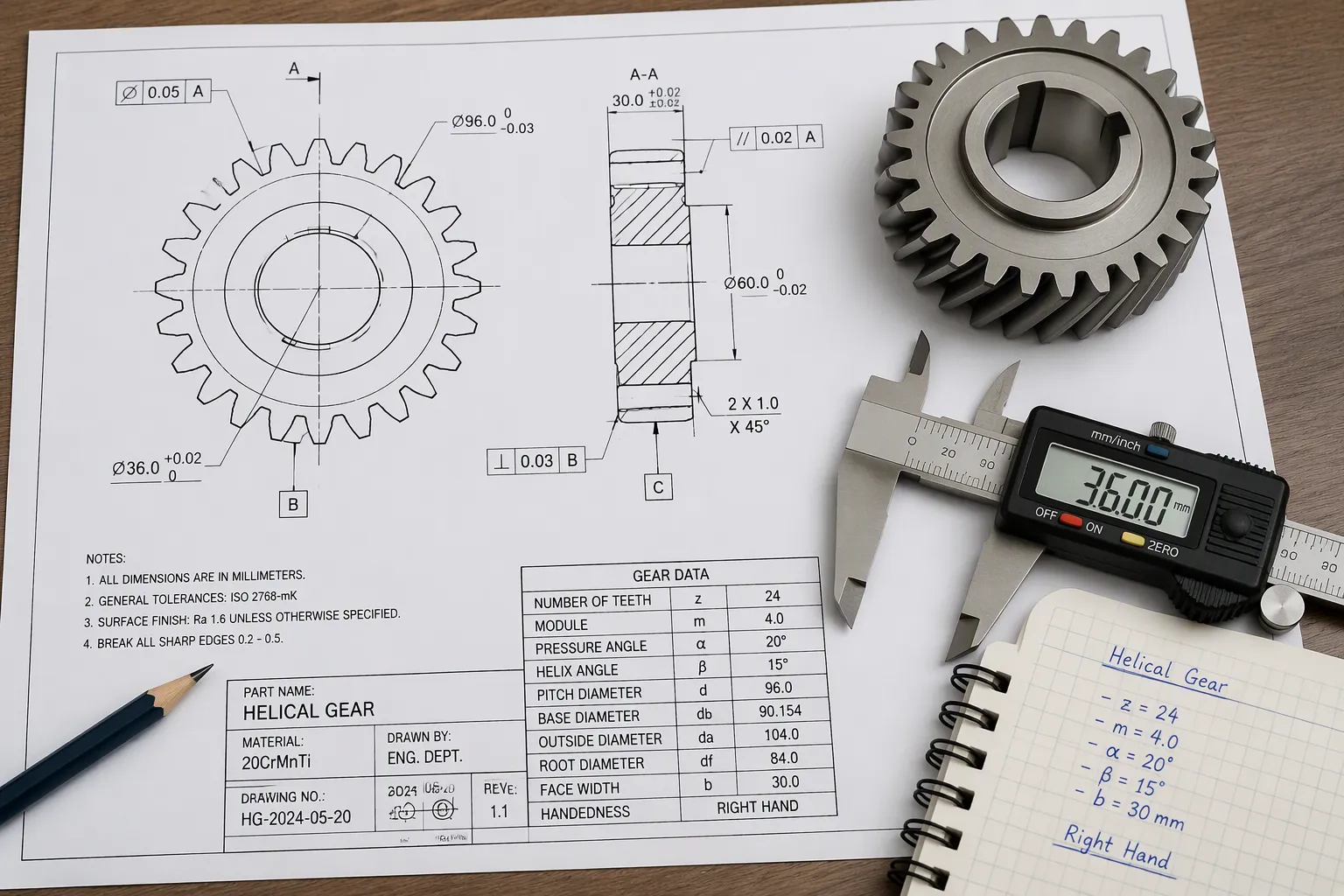
A complete gear drawing has every value the manufacturer needs to price and build the part. Start with the basics. Show key dimensions like bore diameter, shaft diameter, keyway dimensions, spline specifications, and mounting dimensions. For gear shafts and integrated parts, add shaft shoulder location, fitting areas, and assembly direction. These features affect machining time and tooling, so they go straight into the quote.
Dimensions, Tolerances, and Datums
Tolerances tell the supplier how tight the process must run. State bore tolerance, runout requirement, tooth profile tolerance, and tooth lead tolerance. Name the accuracy grade per ISO, AGMA, or DIN. Match the tolerance to the real application, since general industrial duty and high-speed duty need different limits. Datum references keep assembly references clear, and gear flank deviations are measured about a datum axis. Name the features that establish it, such as the bore, bearing journals, or centers. Tie radial and axial runout of those features to the same datums through geometric tolerancing. State whether the drawing follows ASME Y14.5-2018 or ISO GPS, and note any gap between the inspection datum and normal part holding in your RFQ.
Category | Items to include on the gear drawing |
|---|---|
Key dimensions | Bore diameter; shaft diameter; keyway dimensions; spline specifications; mounting dimensions; shaft shoulder location, fitting areas, assembly direction |
Tolerances | Bore tolerance; runout requirement; tooth profile tolerance; tooth lead tolerance; accuracy grade per ISO, AGMA, or DIN |
Datum references | Datum references so assembly references are unambiguous |
Gear Data and Inspection Callouts
The gear data block defines the gear geometry specifications. List the number of teeth and the normal module, or the diametral pitch on imperial drawings. Add the normal pressure angle, helix angle, and hand of helix. Include the profile shift coefficient, or tooth thickness with its measurement method, such as span over a stated number of teeth or dimension over pins. Give tip diameter, root diameter, and face width. Name the basic rack profile, the mating gear tooth count, and the operating center distance. State the accuracy standard, its edition, and the class explicitly, for example ISO 1328-1:2013 class 6 or AGMA A5. The two systems are broadly aligned but not identical, so the controlling standard must appear on the drawing.
Inspection callouts complete the package. Specify surface texture on flanks and in the root as Ra or Rz, the acceptability of grinding notches in the root fillet, and any edge-break requirement. These details affect the finishing route and the price. A clear drawing also lists material grade, heat treatment and hardness, and required reports such as material certificates, hardness reports, dimensional reports, and gear inspection reports. Each element feeds the quotation directly, because the supplier prices machining steps, heat treatment, and inspection against them.
Changyulong accepts customer drawings and can match existing dimensions for drop-in replacement. Send a clear drawing with complete drawing data, and the review moves faster. A full drawing removes guesswork, and a clear drawing turns your request into a firm quote.
Matching Details to Your Application and Custom Gearbox OEM
Agricultural and Off-Highway Equipment
The type of application changes what information a supplier asks you for. Agricultural and off-highway buyers usually start with torque, shock loads, and mounting. Heavy-duty truck and specialty buyers focus on duty cycle, ratio, and inspection standards. Share your application details early, and the review starts on the right footing.
Off-highway drives face cantilevered loads, so size on overturning moment rather than static torque alone. Count cycles per hour and operating hours per season to set a duty target. Define dust, moisture, and temperature swings so sealing and coating match the field. Confirm the mounting bolt pattern, output shaft dimensions, and flange depth against the implement drawing. A drive that passes a bench test can still fail under real load when these points go unstated.
Parameter category | What to confirm |
|---|---|
Power and torque | Input power and output torque requirement |
Speed and ratio | Gear ratio, input rpm, output speed, rotation direction |
Shaft interface | Spline or keyway, shaft dimensions, shaft position |
Mounting | Flange structure, hole pattern, flange dimensions, installation space |
Environment | Lubrication method, dust, moisture, temperature |
Application | Implement type, such as rotary tiller or cultivator |
Order details | Expected quantity, target market, delivery planning |
Heavy-Duty Truck and Specialty Applications
Choosing a custom gearbox OEM means settling mounting options, gear ratios, housing materials, and shaft orientation up front. These choices shape the housing, the bearings, and the price. Bring your torque, speed, load, and service condition data to that conversation, and the supplier can match a frame size instead of guessing.
Changyulong product lines fit different duty profiles. R/S/K/F helical gearboxes suit continuous high-torque work, with the K series reaching 50,000 Nm. Worm gearboxes provide self-locking for lifting duties. B/X cycloidal reducers absorb high shock overload. Each option has a place, and the right fit follows from your duty cycle and motion profile. A complete quote request lets the factory confirm the match and return a firm quotation.
No Drawing? Make Your Gear RFQ Stronger
Samples, Reverse Engineering, and Guided Specs
You can still put together a strong gear RFQ without a drawing. Send a physical sample and let the manufacturer measure it. Reverse engineering recovers tooth geometry, splines, bores, and fits from the worn part. The supplier rebuilds the geometry in CAD, corrects for wear, and sets the material and heat treatment for your duty. This path works well for old equipment where the original support has ended.
For old or damaged gear replacements with no existing drawings, the manufacturer must be able to measure and rebuild tooth geometry from a physical sample.
Always send the sample along with application details and how the part failed. A replacement should be specified correctly, not just copied in size. If you have no sample either, work with the OEM to build a specification from torque, speed, mounting, and environment. Changyulong offers custom engineering support and factory-direct pricing to help you fill these gaps.
Practical Tips for a Faster Quote
Say what you know and mark what you do not. Guessing a value costs more time than marking it unknown. The table below shows what to send and why each item speeds up the quotation.
Information to provide | Why it speeds up quoting |
|---|---|
Company and contact details | Lets the manufacturer reach you quickly for clarifications |
Quantity | Volume drives per-piece pricing |
Material and processes | Both affect cost and lead time |
Quality level | Sets inspection scope and machinery needs |
Delivery terms | Shapes the final price |
Send the request by email so there is a written record, then flag it by messaging app for a quicker reply. Share a general budget range instead of an exact target. Expect replies within one to three business days for a clear request. When you ask for a gear quote, include a named engineering contact so questions reach the right person. This is what to send for a custom gear quote that moves fast. A complete custom gear RFQ shortens the path from inquiry to delivered gearbox.
Your checklist covers drawings or samples, gear parameters, material and heat treatment, quantity, application data, and inspection plus delivery terms. Each item removes a guess. A drawing defines the part, parameters set its size, and material choices fix durability and cost. Quantity drives unit pricing, and application data guides sealing and lubrication.
Gather what you have. Flag what you lack instead of filling gaps with estimates. Send that package as a complete RFQ, and the conversation starts on solid ground. A clear request earns a firm quote on the first pass. Thorough preparation shortens the path from first inquiry to a delivered gearbox, and it keeps every later step moving.
FAQ
What should you send if you have no drawing or sample?
Send your application data instead. Include torque, speed, ratio, mounting position, and operating environment. The manufacturer can build a specification from these values. Mark any unknown items clearly instead of guessing. Changyulong offers custom engineering support to help you fill the gaps.
How fast can you expect a quote and a 3D model?
A clear request usually gets a reply within one to three business days. Changyulong delivers 3D CAD models within 48 hours. Complete data on drawings, materials, quantity, and inspection keeps that timeline on track. Missing details lead to questions, and each round adds delay.
Can the factory match your existing gearbox for drop-in replacement?
Yes. Changyulong accepts customer drawings and matches existing dimensions for drop-in replacement. The team can adjust output shaft heights and diameters to fit your machinery. Send a sample or a marked-up drawing with the critical fits called out.
What testing and quality documents come with the gearbox?
Every unit goes through 100% load, noise, and oil-leak testing before shipment. Helical gears grind to DIN 6 accuracy, and 20CrMnTi steel case-hardens to 58–62 HRC. The factory holds ISO 9001:2015 certification. Ask for material certificates, hardness reports, and dimensional reports in your RFQ.
Which gearbox series fits high shock loads versus continuous torque?
B/X cycloidal reducers absorb high shock overload, with capacity up to 500%. R/S/K/F helical gearboxes suit continuous high-torque duty, and the K series reaches 50,000 Nm. Worm gearboxes provide self-locking for lifting. Share your duty cycle, and the factory confirms the match.