

A custom gearbox is an industrial power transmission unit configured or engineered to meet application-specific requirements that a standard gearbox cannot fully satisfy. Customization may involve the gear ratio, output torque, shaft dimensions, mounting arrangement, motor interface, housing configuration, or operating conditions.
You may need a custom gearbox when an existing model cannot fit your machine, deliver the required output speed, handle the operating load, or connect to your equipment without costly modifications. However, not every application requires a completely custom design. In many cases, selecting the right model from an established gearbox series and adjusting its configuration is a more economical solution.
This guide explains how to determine whether you need a custom gearbox, compare common industrial gearbox types, identify the specifications that can be customized, and prepare the information required for a quotation from CYL Reducer.
Looking for a gearbox for your equipment?
Share your application, required output speed, torque, installation dimensions, and operating conditions to identify a suitable gearbox configuration.
Request a Custom Gearbox QuoteExplore Gearbox Products1. What Is a Custom Gearbox?
A custom gearbox is a gear reducer designed or configured around the mechanical, operational, and installation requirements of a particular machine. It transfers power from a motor or other input source to a driven component while providing the required speed reduction, torque output, and motion characteristics.
In industrial procurement, the term “custom gearbox” can describe several levels of customization:
Standard gearbox selection: Choosing an existing model with specifications that already match the application.
Configured gearbox: Selecting available options such as the gear ratio, motor connection, mounting position, output shaft, or output flange.
Modified gearbox: Adapting specific dimensions or interfaces to fit existing equipment, subject to technical feasibility.
Custom-engineered gearbox: Developing a more application-specific solution when standard products and available configurations cannot meet the technical requirements.
The most appropriate solution depends on the gap between your equipment requirements and the specifications of available products. A standard gearbox with a suitable shaft and mounting configuration may be sufficient, while a machine with unusual space constraints, special loads, or synchronized motion requirements may need further engineering.
For most industrial buyers, the goal is not to customize every component. It is to achieve reliable power transmission, straightforward installation, and acceptable lifecycle cost with the least necessary design complexity.
2. Custom Gearbox vs. Standard Gearbox: What Is the Difference?
The main difference between a standard gearbox and a custom gearbox is the degree of adaptation required to meet the application's specifications. A standard model is usually easier to select and may offer a shorter delivery time, while a custom solution can address requirements that fall outside standard configurations.
| Comparison | Standard Gearbox | Custom Gearbox |
|---|---|---|
| Specifications | Uses established model specifications | Configured or engineered around project requirements |
| Gear ratio | Selected from available ratios | Selected or engineered to meet the required output conditions |
| Output shaft | Standard shaft dimensions and options | Dimensions or interfaces may be adapted where feasible |
| Mounting | Available foot, flange, or other standard arrangements | Mounting details may be modified to suit the machine |
| Development cost | Generally lower when a suitable model is available | May increase with engineering, tooling, testing, or special components |
| Lead time | May be shorter for available stock or standard production | Depends on design confirmation, materials, manufacturing, and testing |
| Best suited for | Conventional machinery and established installation interfaces | Non-standard dimensions, special interfaces, or demanding operating conditions |
When Is a Standard Gearbox the Better Choice?
A standard gearbox is usually the more practical option when its rated capacity, reduction ratio, output configuration, mounting dimensions, and operating limits meet the application requirements. It can reduce engineering work and simplify replacement, maintenance, and spare-parts management.
When Is Customization Worth Considering?
Customization becomes relevant when adapting the machine to a standard gearbox would require substantial redesign, additional couplings, expensive mounting modifications, or compromises in performance. A properly specified custom solution can improve integration and reduce installation complexity.
Selection principle: Do not customize what a suitable standard gearbox can already do reliably. First evaluate existing models and available configurations, then define the specific modifications that are actually necessary.
3. When Do You Need a Custom Gearbox?
Several engineering and procurement situations can indicate that a custom gearbox or a specially configured gear reducer is worth evaluating.
3.1. Your Equipment Requires a Specific Output Speed or Torque
A gearbox must deliver the output speed and torque required by the driven machine. If the available reduction ratios cannot meet the target operating speed, or the selected unit lacks sufficient rated capacity for the duty cycle, another model or configuration may be necessary.
When evaluating this requirement, confirm the motor power, input speed, target output speed, required torque, starting conditions, and operating duration. Also consider transmission efficiency and the load characteristics of the driven equipment.
3.2. Standard Shaft or Mounting Dimensions Do Not Fit
Mechanical compatibility is one of the most common reasons to consider a custom gearbox. Your existing machine may require a particular output shaft diameter, shaft extension, keyway, hollow bore, flange diameter, bolt pattern, or mounting position.
For example, a conveyor designed around a hollow-shaft drive may be difficult to integrate with a gearbox that only offers a different output arrangement. A suitable parallel-shaft helical gearbox or a configured worm gearbox may offer a more direct connection, depending on the load and layout.
3.3. Your Machine Has Limited Installation Space
Space restrictions can affect the gearbox type, shaft orientation, motor position, and overall assembly dimensions. Right-angle drives may help when the input and output axes need to be arranged at 90 degrees. Parallel-shaft designs may be more suitable when the machine requires a compact drive along a defined installation direction.
Before selecting a unit, check the complete assembly envelope, including the motor, gearbox housing, output shaft, coupling, mounting hardware, and maintenance clearance.
3.4. The Application Involves Shock Loads or Frequent Starts and Stops
Applications such as mixers, feeders, crushers, and material-handling systems may experience load fluctuations, frequent starting, reversing, or short periods of high torque. A gearbox selected only by motor power may not provide adequate capacity for these operating conditions.
Confirm the peak and average loads, operating cycle, starting frequency, reversing frequency, and service factor requirements. Cycloidal gear reducers may be worth evaluating for applications with demanding overload or shock-load conditions, but the final selection must be based on the actual load profile and model ratings.
3.5. You Need Specialized Lifting or Synchronized Motion
Equipment that raises platforms, adjusts machine height, or moves multiple lifting points together may require more than an individual speed reducer. A screw jack system can combine gear reduction with linear motion, while connecting shafts and suitable drive arrangements may coordinate multiple lifting points.
For these applications, specify the load at each lifting point, total travel, lifting speed, duty cycle, synchronization tolerance, installation orientation, and required safety provisions. Do not assume that a worm gearbox is automatically self-locking under every load or operating condition; confirm the manufacturer's specifications and any additional braking or safety requirements.
4. Which CYL Reducer Gearbox Type Should You Choose?
Different gearbox designs solve different transmission problems. CYL Reducer offers industrial gearbox families including R/S/K/F helical gearboxes, cycloidal gearboxes, and NMRV/WP worm gearboxes, as well as screw jacks. The best starting point is to match the transmission structure to the application before finalizing dimensions and options.
4.1. Helical Gearboxes: R/S/K/F Series
Helical gearboxes are commonly considered for industrial machinery that needs efficient, smooth power transmission. The appropriate series depends on the required shaft arrangement, mounting layout, and application.
R Series: An option to evaluate for inline helical transmission requirements.
S Series: A helical-worm geared motor configuration for applications requiring a combined transmission arrangement.
K Series: A bevel-helical geared motor option for right-angle drive layouts and industrial conveying requirements.
F Series: A parallel-shaft helical gearbox option for compact installation and parallel-shaft power transmission.
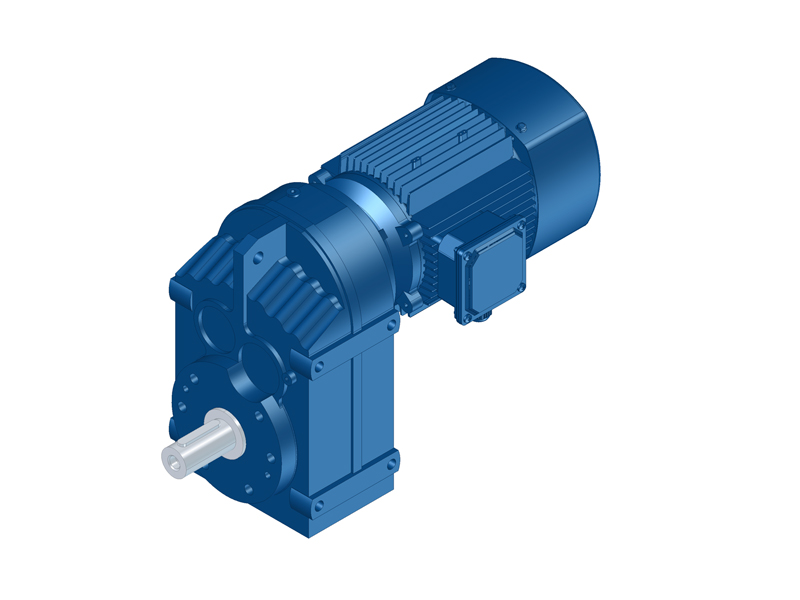
The F Series product information includes foot-mounted and flange-mounted options, as well as solid and hollow output shaft configurations, depending on the model. These choices can help buyers match the gearbox to conveyor systems, material-handling equipment, mixers, and production machinery.
Explore the CYL Reducer industrial gearbox product range to compare available product families and configurations.
4.2. Cycloidal Gearboxes: BLD/XLD and BWD/XWD Series
Cycloidal gear reducers use a cycloidal pin-wheel transmission mechanism. They are worth considering when an application requires a high reduction ratio, a compact drive arrangement, or resistance to demanding load variations.
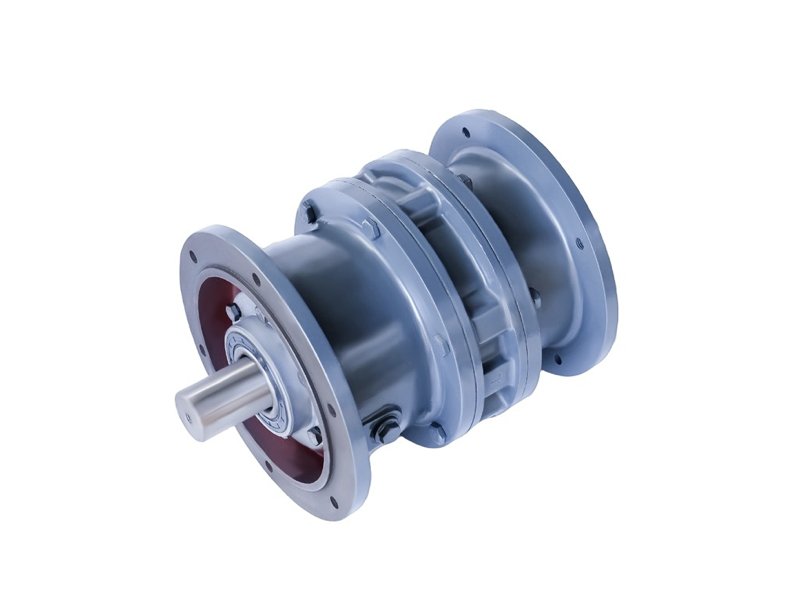
Potential applications include industrial mixers, textile machinery, material handling, lifting and conveying equipment. The correct model depends on the required output torque, reduction ratio, input arrangement, installation orientation, and operating cycle.
A cycloidal gearbox should not be selected solely because an application is described as heavy-duty. Confirm the rated capacity, actual load profile, thermal limits, lubrication requirements, and permissible starting or reversing conditions with the supplier.
See the CYL Reducer cycloidal gearbox range for available series and configurations.
4.3. Worm Gearboxes: NMRV/WP Series
Worm gearboxes are often considered when a compact right-angle drive, flexible installation, or a substantial reduction ratio is needed. Depending on the model, available configurations may include a motor input, flange input, hollow output shaft, solid output shaft, or output flange.
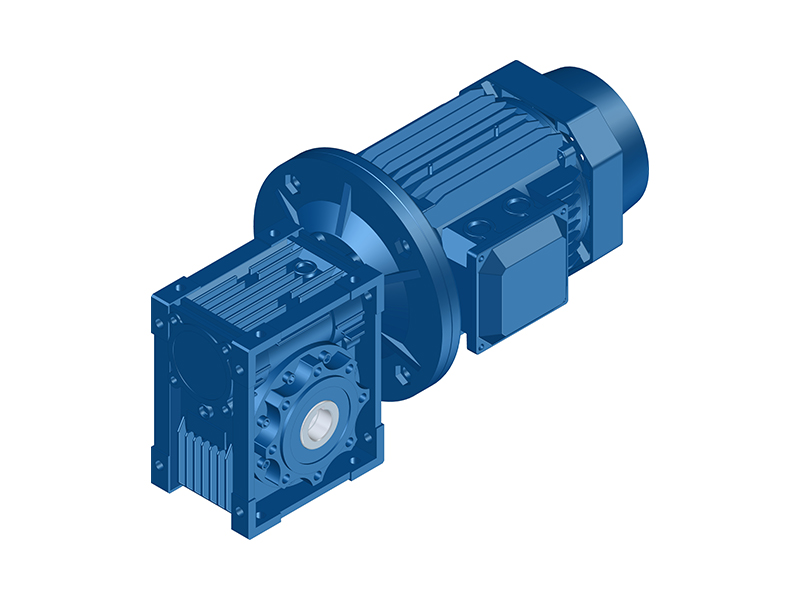
NMRV worm gearboxes may suit selected conveyors, packaging machines, and automation equipment. WP series gearboxes and SWL screw jacks may be relevant to different lifting or positioning requirements.
Worm gearboxes can have different efficiency and thermal characteristics from helical or cycloidal designs. Evaluate heat generation, duty cycle, lubrication, output load, and any holding requirements before making a final decision.
Explore the CYL Reducer worm gearbox and screw jack range.
| Gearbox Type | Consider It When | Key Checks Before Ordering |
|---|---|---|
| R Series helical gearbox | Inline industrial transmission is required | Ratio, torque, input/output arrangement, mounting |
| S Series geared motor | A combined helical-worm drive arrangement is suitable | Motor configuration, ratio, mounting position, duty cycle |
| K Series bevel-helical gearbox | A right-angle drive layout is required | Output torque, shaft orientation, mounting dimensions |
| F Series parallel-shaft helical gearbox | Parallel-shaft transmission and compact integration are important | Hollow or solid shaft, flange, ratio, installation space |
| BLD/XLD or BWD/XWD cycloidal gearbox | High reduction or demanding load variations need evaluation | Peak load, output torque, speed, duty cycle, lubrication |
| NMRV/WP worm gearbox | A compact right-angle drive is required | Ratio, thermal limits, mounting, output configuration |
| SWL screw jack | Linear lifting or positioning is required | Load, travel, speed, synchronization, safety provisions |
Not sure which gearbox structure fits your machine?
Send your operating requirements and installation drawing to CYL Reducer for an initial product selection discussion.
Discuss Your Gearbox Requirements5. Which Gearbox Specifications Can Be Customized?
Customization can involve several mechanical and operating parameters. The available options depend on the gearbox family, frame size, design constraints, and manufacturing feasibility. Confirm the final configuration with the supplier before releasing a purchase order.
5.1. Gear Ratio, Input Speed, and Output Torque
The gear ratio determines the relationship between input and output speed. For a simple reduction drive, a higher reduction ratio generally results in a lower output speed. Actual output torque depends on input torque, ratio, transmission efficiency, and operating conditions.
For preliminary selection, provide the motor power, input speed, target output speed, required output torque, and expected load profile. If the machine has frequent starts, reversing, or shock loads, include those conditions in the specification.
5.2. Output Shaft, Hollow Bore, and Flange Dimensions
Mechanical interfaces often determine whether a gearbox can be installed without redesigning the driven machine. Depending on the product family, relevant parameters may include:
Output shaft diameter and extension length
Keyway or other shaft connection details
Hollow shaft bore dimensions
Output flange diameter and bolt pattern
Mounting hole positions and center distances
Coupling and driven-equipment interface requirements
Provide a dimensioned drawing whenever possible. A photograph can help explain the installation, but it may not provide enough information to confirm critical dimensions or tolerances.
5.3. Motor Interface and Mounting Configuration
Gearbox integration may require a particular motor frame, IEC or other motor interface, input shaft, flange arrangement, or installation orientation. Confirm the motor's power, speed, frame size, mounting standard, voltage, frequency, and any braking or control requirements relevant to the application.
Also check whether the gearbox must be foot-mounted, flange-mounted, shaft-mounted, or installed in another orientation. Lubrication arrangements and allowable mounting positions can vary between models.
5.4. Sealing, Lubrication, Materials, and Operating Environment
Temperature, dust, moisture, chemical exposure, washdown procedures, and outdoor installation can affect housing materials, seals, lubricant selection, and protection requirements. A gearbox intended for a dry indoor environment may not be appropriate for a corrosive or frequently washed installation without suitable design provisions.
Describe the actual environment rather than simply requesting a “heavy-duty” or “waterproof” gearbox. The supplier can then assess which options are technically appropriate and which specifications need to be confirmed.
6. Custom Gearbox Applications Across Industrial Sectors
Custom gearbox requirements often arise when a standard drive must fit a particular machine design or operating cycle. The following examples illustrate the information that should be considered during selection.
Conveyor and Material Handling Systems
Conveyors require a suitable output speed, torque capacity, mounting arrangement, and connection to the drive roller or conveyor shaft. F Series parallel-shaft helical gearboxes or other suitable geared motors may be evaluated according to the layout and load.
Packaging and Automated Production Lines
Packaging machines may have limited installation space and defined motor-interface requirements. Compact worm gearboxes or suitable helical geared motors may be considered, depending on the speed, accuracy, duty cycle, and load.
Mixers and Agitators
Mixing equipment may experience variable loads, startup resistance, or changes in material viscosity. Confirm startup torque, continuous operating torque, shaft loads, duty cycle, sealing requirements, and the characteristics of the material being processed.
Textile and Printing Machinery
These machines may require stable speed reduction, consistent operation, and mechanical compatibility with existing equipment. Gear ratio, installation dimensions, noise requirements, and operating hours should be considered together.
Mining and Heavy-Duty Conveying
Bulk material handling can involve high loads, frequent starts, and challenging environmental conditions. Select a gearbox using the actual torque demand, service factor, shaft loads, mounting structure, and maintenance requirements rather than nominal motor power alone.
Lifting and Positioning Systems
Where equipment needs controlled linear travel, screw jacks may be considered. Multi-point lifting systems require additional evaluation of load distribution, synchronization, drive connections, travel limits, and safety devices.
7. How Does the Custom Gearbox Design and Manufacturing Process Work?
A well-defined process helps reduce specification errors and avoids costly changes after production begins. A typical custom gearbox project follows these steps:
Requirement review: The buyer provides application details, load information, motor specifications, speed requirements, installation dimensions, and environmental conditions.
Initial gearbox selection: The supplier evaluates suitable standard models and available configurations before recommending a more extensive custom design.
Configuration or engineering design: The parties confirm the gearbox type, ratio, shaft arrangement, mounting interface, and any feasible modifications.
Drawing and specification confirmation: Relevant dimensions, tolerances, materials, motor interfaces, lubrication requirements, and acceptance criteria are reviewed before production.
Manufacturing and inspection: Components are manufactured and assembled according to the agreed specifications, with inspection and testing appropriate to the product and order.
Delivery and technical support: The parties confirm packaging, shipping arrangements, installation requirements, documentation, and any agreed after-sales support.
For OEM projects, it is useful to agree on the revision-controlled drawing, inspection requirements, sample approval process, and acceptance criteria before placing a production order. This is especially important when the gearbox must fit an existing machine or be supplied repeatedly for the same equipment platform.
8. How Much Does a Custom Gearbox Cost?
There is no single price for every custom gearbox. The quotation depends on the gearbox type, size, required performance, customization scope, order quantity, and delivery requirements. A configured standard gearbox may involve relatively little additional engineering, while a design requiring special components or extensive testing may cost more.
The main cost factors usually include:
Gearbox type and frame size: Different transmission structures and capacities have different manufacturing requirements.
Torque, power, and ratio: Required performance affects component sizing and model selection.
Mechanical modifications: Special shaft dimensions, flange interfaces, mounting arrangements, or housing changes may add engineering and production work.
Materials and operating conditions: Special seals, materials, lubrication, or environmental requirements may affect the cost.
Order quantity: Prototype, low-volume, and repeat-production orders may have different unit economics.
Inspection, testing, and logistics: Additional documentation, testing, packaging, and shipping terms can affect the total project cost.
When comparing supplier quotations, consider more than the initial unit price. Installation modifications, maintenance access, spare-parts availability, energy use, downtime risk, and expected service life can all affect the total cost of ownership.
Lead time also varies with the scope of customization, material availability, production scheduling, drawing approval, and testing requirements. Ask the supplier to confirm the expected schedule for your specific configuration rather than relying on a generic delivery estimate.
9. How to Choose a Reliable Custom Gearbox Manufacturer
The right supplier should be able to help you match the gearbox design to the application and confirm whether the requested configuration is technically feasible. Evaluate manufacturers against verifiable technical and commercial criteria.
Relevant product range: Check whether the supplier offers the required helical, cycloidal, worm, or lifting-drive configuration.
Technical documentation: Request model specifications, dimension drawings, installation instructions, and relevant operating limits.
Engineering communication: Confirm that the supplier can review load conditions, motor details, mounting requirements, and interface dimensions.
Manufacturing and quality control: Ask about relevant machining, assembly, inspection, and testing processes for the product being quoted.
Customization capability: Verify which dimensions and interfaces can be modified and which must remain within standard design limits.
Commercial clarity: Confirm quotation scope, minimum order quantity, delivery terms, warranty, documentation, and after-sales responsibilities.
Export support: For overseas projects, confirm packaging, shipping arrangements, and the availability of technical communication in your preferred language.
CYL Reducer supplies several industrial gearbox families, including helical gearboxes, cycloidal gear reducers, worm gearboxes, and screw jacks. Buyers can begin with the product catalogue and then discuss the technical details of their application with the supplier.
For a custom order, make sure that the final quotation and technical documents identify the selected model, agreed configuration, key dimensions, performance requirements, and any special inspection or acceptance conditions.
10. What Information Do You Need for a Custom Gearbox Quote?
Providing complete technical information helps the supplier evaluate the application more efficiently and reduces the risk of quoting an unsuitable configuration. If some parameters are unknown, share the available details and ask which additional measurements are needed.
Use the following checklist to prepare your inquiry:
Application: What machine will the gearbox drive?
Motor information: What are the motor power, input speed, frame size, voltage, and frequency?
Output requirements: What output speed and torque are required?
Gear ratio: Is a specific reduction ratio required, or is the target output speed known?
Load conditions: Is the load continuous, intermittent, variable, or subject to shock loads?
Shaft interface: What shaft diameter, length, keyway, hollow bore, or connection type is required?
Mounting dimensions: What are the available installation space, mounting position, flange dimensions, and bolt pattern?
Operating environment: What are the ambient temperature, dust, moisture, corrosion, and cleaning conditions?
Order details: What quantity, destination country, target delivery date, and documentation requirements apply?
If you are replacing an existing gearbox, include the nameplate information, model number, dimension drawing, and clear photographs of the unit and its installation. These references can help the supplier assess whether an existing model, a configured alternative, or a more customized solution is appropriate.
Ready to discuss your custom gearbox requirements?
Send CYL Reducer your application details, target speed and torque, shaft and mounting dimensions, motor information, and expected quantity. If you have an existing gearbox, attach its nameplate and dimension drawing for reference.
Request a Custom Gearbox QuoteContact CYL ReducerFrequently Asked Questions About Custom Gearboxes
1. What is the difference between a custom gearbox and a standard gearbox?
A standard gearbox uses established specifications and available configurations. A custom gearbox is configured or engineered to meet requirements that standard options cannot fully satisfy, such as special shaft dimensions, mounting interfaces, reduction ratios, or operating conditions. Customization may involve a small modification or a more extensive engineering project.
2. Can an existing gearbox be modified to fit my machine?
In some cases, yes. Changes to output shafts, flanges, motor interfaces, or mounting details may be possible depending on the gearbox design. However, modifications must be checked for mechanical strength, bearing arrangements, sealing, lubrication, and rated capacity. Provide a drawing or existing gearbox model number so the supplier can assess feasibility.
3. Which gearbox type is best for high torque and shock loads?
There is no universal answer. Helical, bevel-helical, and cycloidal gearboxes may all suit different high-load applications. Selection depends on output torque, speed, duty cycle, shock-load magnitude, installation layout, and model ratings. A supplier should evaluate the complete load profile rather than selecting a gearbox based on a single torque value.
4. Can CYL Reducer customize output shafts, flanges, and gear ratios?
CYL Reducer offers multiple gearbox families and configurations, including different shaft and mounting arrangements. The availability of a specific shaft dimension, flange interface, or ratio depends on the selected series and technical feasibility. Provide the required dimensions and operating parameters so the appropriate configuration can be reviewed.
5. What information is required to select a custom gear reducer?
Start with the application, motor power, input speed, required output speed and torque, load profile, installation dimensions, shaft connection, mounting position, and operating environment. For replacement projects, a model number, nameplate photograph, and dimension drawing are particularly useful.
6. How long does it take to manufacture a custom gearbox?
Lead time depends on whether the project uses a standard model, a configured gearbox, or a more extensively customized design. Drawing approval, component availability, order quantity, manufacturing capacity, and testing requirements can also affect the schedule. Request a project-specific lead-time estimate before confirming the order.
7. Is a custom gearbox always more expensive than a standard model?
Not necessarily, but additional engineering or special components can increase the initial price. If a custom configuration avoids extensive machine modifications or improves integration, it may offer value over the equipment lifecycle. Compare the total project cost, including installation, maintenance, downtime risk, and spare parts, rather than unit price alone.
Conclusion: Choose the Gearbox Around Your Application
A custom gearbox is worth considering when standard products cannot meet your machine's performance, installation, or operating requirements. However, the best solution may be a standard gearbox with the right configuration rather than a completely new design.
Start by defining the required output speed and torque, load profile, mounting dimensions, shaft interface, motor specifications, and operating environment. Then compare suitable gearbox structures, such as helical, cycloidal, and worm gear reducers, before deciding which parameters need customization.
With its range of industrial gearbox solutions, CYL Reducer can be a starting point for evaluating suitable drive configurations. Share your application details and available drawings to discuss the next steps for your gearbox selection or custom inquiry.