

What Is a Cycloidal Gearbox and How Does It Work?
Industrial machinery depends on reliable power transmission systems to convert motor speed into usable torque. Among the many gearbox types available today, the Cycloidal Gearbox has earned a reputation for its exceptional torque density, compact design, and outstanding durability. Whether used in conveyors, mixers, packaging equipment, mining machinery, or heavy-duty industrial applications, a Cycloidal Gear Reducer delivers smooth, precise, and efficient performance even under demanding operating conditions.
Unlike conventional helical or worm gearboxes, a Cycloidal Gearbox utilizes a unique cycloidal disc and pinwheel mechanism instead of traditional gear teeth. This innovative design distributes the load across multiple contact points, reducing wear while significantly improving shock resistance and service life.
In this guide, we'll explain what a cycloidal gearbox is, how it works, its advantages, applications, and how to choose the right Cycloidal Gearbox Manufacturer for your industrial requirements.
Key Takeaways
A Cycloidal Gearbox uses cycloidal discs and pins instead of conventional gears.
Multiple rolling contact points provide higher torque and longer service life.
A Cycloidal Reducer offers excellent shock load capacity and compact construction.
Cycloidal gearboxes are widely used in mining, conveyors, robotics, food processing, and heavy industrial equipment.
Choosing an experienced Cycloidal Gearbox Manufacturer ensures reliable quality, customization, and technical support.
What Is a Cycloidal Gearbox?
A Cycloidal Gearbox, also known as a Cycloidal Reducer, Cycloidal Gear Reducer, or Cycloidal Speed Reducer, is a high-performance speed reduction device that converts high-speed motor input into low-speed, high-torque output.
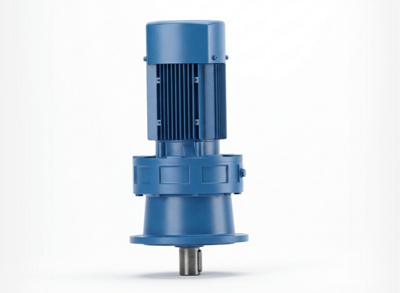
Instead of relying on traditional involute gears, the gearbox operates through a cycloidal motion generated by an eccentric bearing and cycloidal discs. As the discs rotate inside a ring of hardened pins, rotational motion is reduced while torque is multiplied.
Because the transmission load is shared by numerous pins simultaneously, a Cycloidal Gearbox experiences significantly lower stress than conventional gear reducers. This unique mechanism contributes to exceptional durability, smooth operation, and high overload capacity.
Today, industrial users worldwide choose Cycloidal Gear Reducers for applications requiring continuous operation, high reliability, and minimal maintenance.
How Does a Cycloidal Gearbox Work?
The operating principle of a Cycloidal Gearbox is based on cycloidal motion and rolling engagement rather than conventional gear meshing.
The power transmission process includes several stages:
Step 1: Motor Input
The electric motor drives the input shaft connected to an eccentric bearing.
Step 2: Eccentric Rotation
The eccentric bearing causes one or two cycloidal discs to rotate eccentrically inside a stationary ring of hardened pins.
Step 3: Cycloidal Engagement
As the cycloidal discs rotate, specially designed lobes engage with the surrounding pins. Multiple pins remain in contact simultaneously, distributing the transmission load evenly.
Step 4: Output Transmission
Output pins fitted into the cycloidal discs transfer the reduced rotational speed to the output shaft, producing high torque with exceptional efficiency.
Unlike ordinary gearboxes where only one or two teeth may carry the load, a Cycloidal Gear Reducer can have many contact points engaged at the same time. This greatly improves impact resistance, reduces wear, and extends service life.
Main Components of a Cycloidal Gearbox
A standard Cycloidal Gearbox consists of the following components:
Housing
A rigid cast iron or ductile iron housing provides structural strength and protects internal components from dust, moisture, and vibration.
Input Shaft
The motor connects directly to the input shaft, transmitting rotational power into the gearbox.
Eccentric Bearing
The eccentric bearing converts rotational motion into eccentric movement, enabling the cycloidal discs to perform their unique rolling action.
Cycloidal Discs
The cycloidal discs are precision-machined components with specially designed lobes that engage with stationary pins.
Pinwheel Ring
A hardened ring of steel pins surrounds the cycloidal discs and serves as the stationary reaction member.
Output Pins
Output pins transfer motion from the cycloidal discs to the output shaft while maintaining smooth torque transmission.
Bearings and Seals
High-quality bearings and oil seals reduce friction, improve efficiency, and prevent lubricant leakage.
Advantages of a Cycloidal Gearbox
1. High Torque Output
One of the biggest advantages of a Cycloidal Gearbox is its ability to generate extremely high output torque from a compact housing.
Compared with conventional gear reducers, it offers greater torque density without increasing gearbox size.
2. Exceptional Shock Load Capacity
Since multiple pins share the transmitted load, a Cycloidal Gear Reducer can withstand shock loads up to several times its rated torque.
This makes it ideal for mining equipment, crushers, mixers, and heavy-duty conveyors.
3. Long Service Life
Rolling contact significantly reduces friction compared with sliding gear engagement.
Lower wear means:
Longer bearing life
Reduced maintenance
Lower operating costs
Improved reliability
4. High Efficiency
A well-designed Cycloidal Speed Reducer typically delivers transmission efficiencies exceeding 90%, depending on the reduction ratio and operating conditions.
5. Compact Design
Because of its planetary transmission principle, a Cycloidal Gearbox provides high reduction ratios within a relatively small installation space.
This is especially valuable where machine footprints must be minimized.
6. Low Noise and Smooth Operation
The rolling engagement mechanism minimizes vibration and reduces operating noise, making Cycloidal Gear Reducers suitable for automated production lines and precision equipment.
Cycloidal Gearbox vs. Planetary Gearbox
| Feature | Cycloidal Gearbox | Planetary Gearbox |
|---|---|---|
| Load Distribution | Multiple contact pins | Multiple gears |
| Shock Resistance | Excellent | Good |
| Torque Density | Very High | High |
| Precision | High | High |
| Maintenance | Low | Moderate |
| Service Life | Very Long | Long |
| Overload Capacity | Excellent | Good |
| Compactness | Excellent | Excellent |
For applications involving frequent starts, heavy loads, and impact forces, a Cycloidal Gearbox often provides superior durability compared with a conventional planetary gearbox.
Common Applications of Cycloidal Gearboxes
A Cycloidal Reducer is widely used across numerous industries.
Material Handling
Belt conveyors
Roller conveyors
Bucket elevators
Automated warehouses
Mining Industry
Crushers
Feeders
Vibrating screens
Ore conveyors
Food Processing
Mixers
Packaging machines
Filling equipment
Bottle conveyors
Chemical Industry
Agitators
Reactors
Dosing systems
Mixing equipment
Cement Industry
Kiln equipment
Conveying systems
Grinding machinery
Textile Machinery
Spinning equipment
Dyeing machines
Printing machines
Robotics and Automation
Positioning systems
Automated assembly
Servo drive systems
Material transfer robots
How to Choose the Right Cycloidal Gearbox
Selecting the right Cycloidal Gear Reducer requires evaluating several key factors.
Output Torque
Determine the maximum continuous torque required by your equipment.
Reduction Ratio
Choose an appropriate speed reduction ratio based on the desired output speed.
Mounting Configuration
Available options include:
Foot-mounted
Flange-mounted
Horizontal
Vertical
Hollow shaft
Solid shaft
Input Power
Ensure the gearbox matches the motor power and operating conditions.
Duty Cycle
Continuous-duty applications require higher thermal capacity and robust bearings.
Environmental Conditions
Consider operating temperature, dust, humidity, washdown requirements, and corrosion resistance.
Why Choose a Professional Cycloidal Gearbox Manufacturer?
The quality of a Cycloidal Gearbox depends heavily on manufacturing precision, material selection, and quality control.
A professional Cycloidal Gearbox Manufacturer offers:
Precision CNC machining
Heat-treated alloy steel components
Strict dimensional inspection
High-strength bearings
Comprehensive performance testing
Custom reduction ratios
Multiple mounting configurations
OEM and ODM services
Global technical support
Working with an experienced Cycloidal Gearbox Supplier ensures reliable performance, faster delivery, and long-term operational value.
Why Choose CYL Reducer?
As an experienced Cycloidal Gearbox Manufacturer in China, CYL Reducer specializes in designing and manufacturing high-performance Cycloidal Reducers for demanding industrial applications.
Our advantages include:
Extensive product range covering multiple series and reduction ratios
Precision-engineered cycloidal transmission technology
High-strength materials and advanced heat treatment
Stable torque output and low vibration
Flexible OEM and customized solutions
Strict quality inspection before shipment
Competitive global supply capabilities
Responsive technical support and after-sales service
Whether you require a standard Cycloidal Gear Reducer or a customized solution for your equipment, our engineering team is committed to providing reliable, efficient, and durable power transmission products.
Frequently Asked Questions
1. What is the difference between a Cycloidal Gearbox and a worm gearbox?
A Cycloidal Gearbox uses cycloidal discs and pin engagement, while a worm gearbox relies on a worm screw and worm wheel. Cycloidal gearboxes generally provide higher efficiency, greater torque density, better shock resistance, and a longer service life.
2. Is a Cycloidal Gear Reducer suitable for heavy-duty applications?
Yes. Thanks to its multiple load-sharing contact points, a Cycloidal Gear Reducer performs exceptionally well in heavy-duty applications such as mining, steel production, conveyors, mixers, and material handling systems.
3. What reduction ratios are available for Cycloidal Gearboxes?
Depending on the design, Cycloidal Speed Reducers are available in a wide range of reduction ratios, from single-stage to multi-stage configurations, allowing them to meet diverse industrial speed and torque requirements.
4. How often should a Cycloidal Gearbox be maintained?
Routine maintenance typically includes checking lubricant levels, inspecting seals and bearings, and replacing oil according to the manufacturer's maintenance schedule. Proper maintenance helps maximize service life and operating efficiency.
5. Can a Cycloidal Gearbox be customized?
Yes. Professional Cycloidal Gearbox Manufacturers can provide customized reduction ratios, shaft configurations, mounting options, housing materials, and motor integration to meet specific application requirements.
6. Why choose a Chinese Cycloidal Gearbox Manufacturer?
An experienced China Cycloidal Gearbox Manufacturer can offer advanced manufacturing capabilities, competitive pricing, consistent quality, flexible OEM/ODM services, and efficient global delivery, making it an excellent choice for international industrial buyers.
Conclusion
A Cycloidal Gearbox is an advanced power transmission solution designed to deliver high torque, excellent shock resistance, compact dimensions, and long-term reliability. Its unique cycloidal pinwheel mechanism sets it apart from conventional gear reducers by distributing loads across multiple contact points, reducing wear while improving operational efficiency.
Whether you need a Cycloidal Gear Reducer for conveyors, mining equipment, packaging machinery, food processing, or automated production systems, selecting a trusted Cycloidal Gearbox Manufacturer is essential for achieving dependable performance and maximizing equipment lifespan.
With decades of manufacturing expertise, CYL Reducer provides high-quality Cycloidal Gearboxes, customized engineering solutions, and comprehensive technical support to help customers worldwide improve the efficiency and reliability of their industrial power transmission systems.